Adansonia Seeds (Baobab)
Common Name: Tabaldi (Baobab) 10 seeds
Scientific Name: *Adansonia*
Other Names: Habhaboh, Lovers' Tree, Kalkahma, Baobab, Bottle Tree.
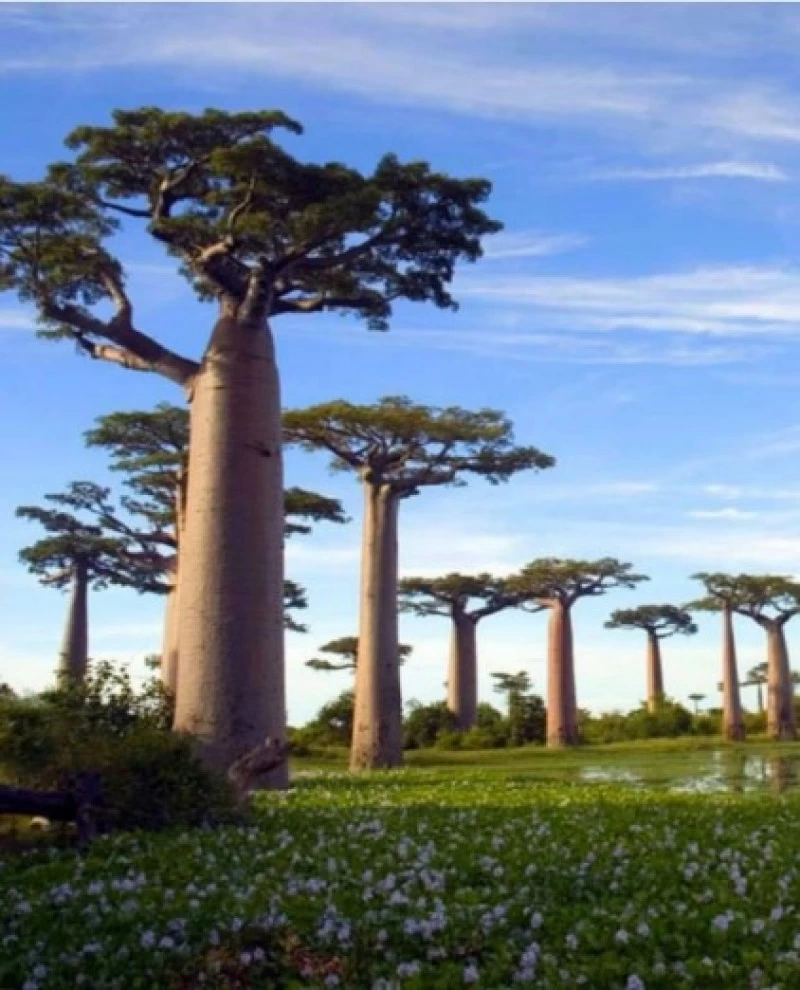
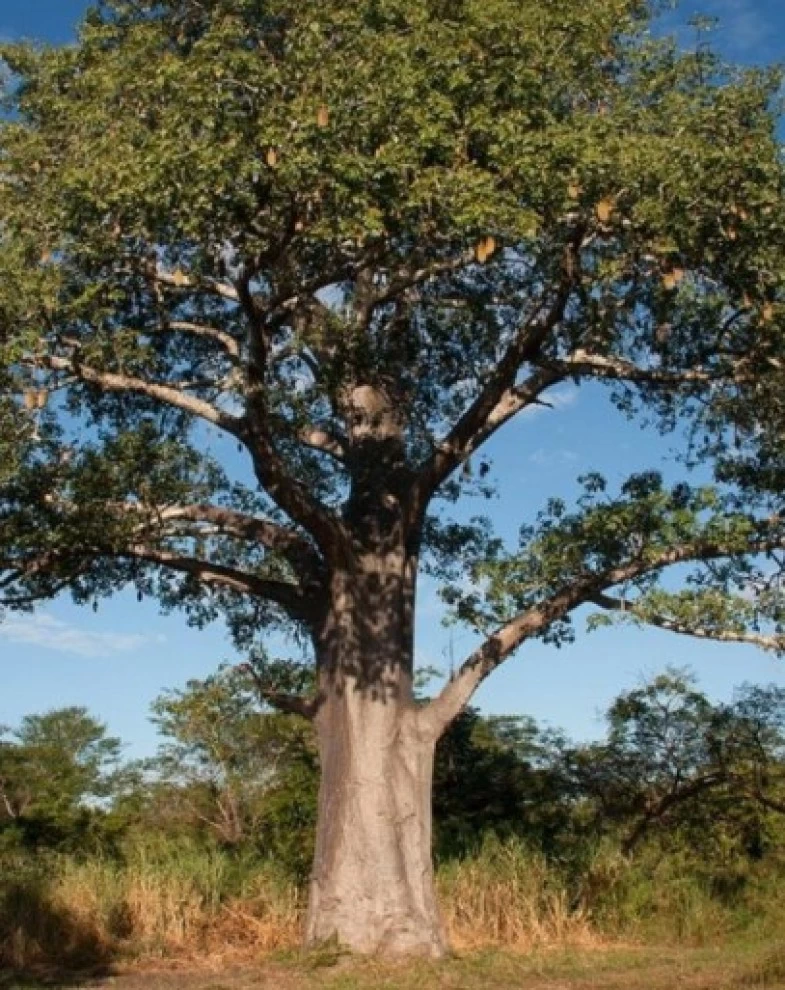
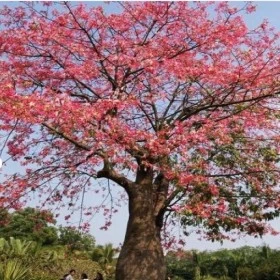
A tropical tree belonging to the Malvaceae family, it is considered one of the largest and tallest trees in the world. It can reach a height of 25–30 meters, and its trunk diameter can reach 11 meters—large enough to accommodate 45 people if hollowed out. A distinctive feature of the Baobab tree is that it remains leafless for nine months of the year, retaining its foliage for only three months (during the autumn season).
• Baobab Tree Flower:
The flowers are large and pendulous, with a diameter ranging from 10 to 12 cm, and feature a long, thick stalk. The petals are large, waxy, and white, curving upwards. The center of the flower is occupied by a large, long-styled stigma surrounded by numerous stamens—featuring white filaments and brown anthers—giving the flower the appearance of a shaving brush.
• Baobab Tree Fruit:
The fruit is a large, indehiscent (does not open on its own) pod, oval or pear-shaped, reaching up to 30 cm in length. Its surface has a velvety texture due to dense, greyish or yellowish-brown fuzz covering the thick, hard, and tough shell. The interior of the fruit is filled with a large number of kidney-shaped seeds. ...kidney-shaped seeds, roughly the size of a bean, with a dark brown shell. These seeds are separated by a delicate, fine-textured substance that is honey-white in color and slightly acidic in taste.
• **Baobab Cultivation Season:**
Autumn and spring are the best seasons for planting the Baobab tree. However, it can be cultivated year-round in greenhouses or controlled indoor environments (such as polytunnels) where temperature, sunlight, or necessary artificial lighting can be regulated.
• **Suitable Climate and Soil for Baobab Cultivation:**
The Baobab is a tropical tree, yet it tolerates humid climates as well as drought and frost. It prefers moist, well-drained, and well-aerated soil and typically relies on rainfall for watering.
• **Baobab Planting Method:**
It propagates via seeds. It is advisable to scarify the seed by making a small incision deep enough to expose the white inner layer, then soaking it in room-temperature water overnight. As with other tree seeds, the planting depth should be between 2 cm and 3 cm.
• **Benefits and Uses:**
Its fruit is used in the production of... ...juices, and a variety of food products are made from them. In western Sudan, they are used to store water during the summer, and they also serve as ornamental trees planted along roads and in large parks.
• Native Habitat of the Baobab Tree:
It is native to Africa and is cultivated in the western and southern regions of Saudi Arabia, as well as in several other Gulf and Arab countries. Baobab trees have enjoyed protected status in southern African nations since 1940. There are ten species of baobab: six are found in Madagascar, while the others are located in Africa and Australia.