Caper (Capparis spinosa)
Scientific name: Capparis spinosa
Other names: Caper
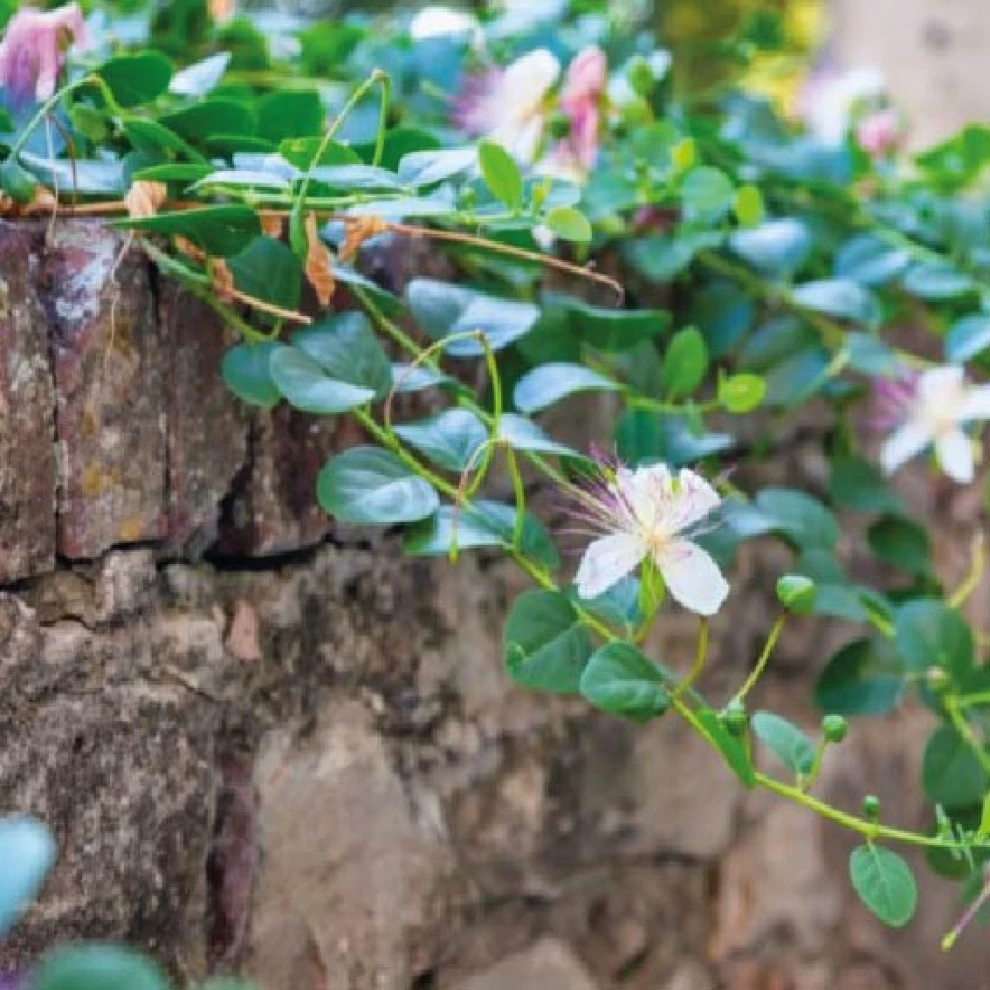
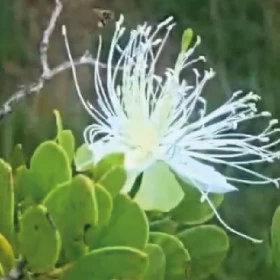
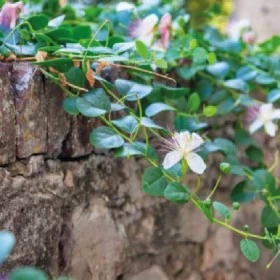
The caper, or caper plant, is a perennial, thorny shrub that grows to about one meter in height. It has many branches and pale green, fleshy, rounded leaves. It is considered one of the most favored nectar-producing plants by bees, and caper honey has health benefits that make it of interest to beekeepers who wish to produce distinctive types of honey.
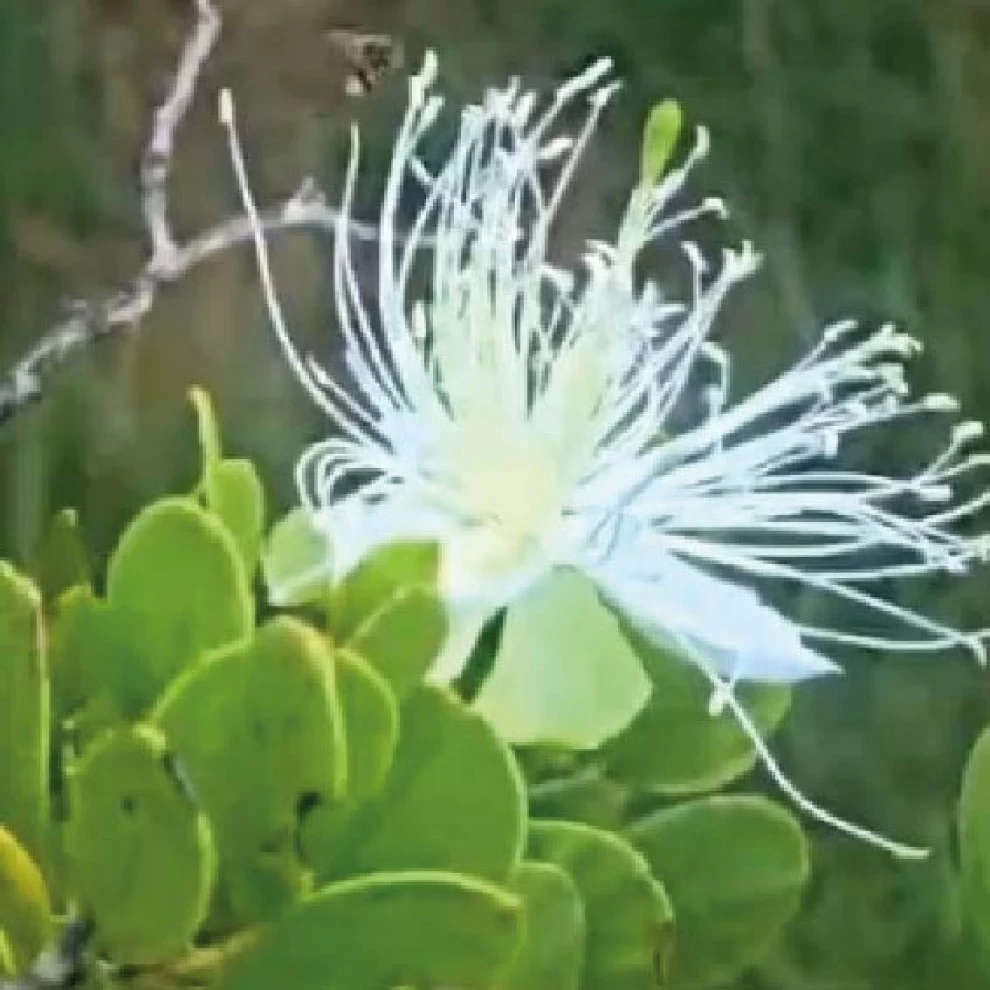
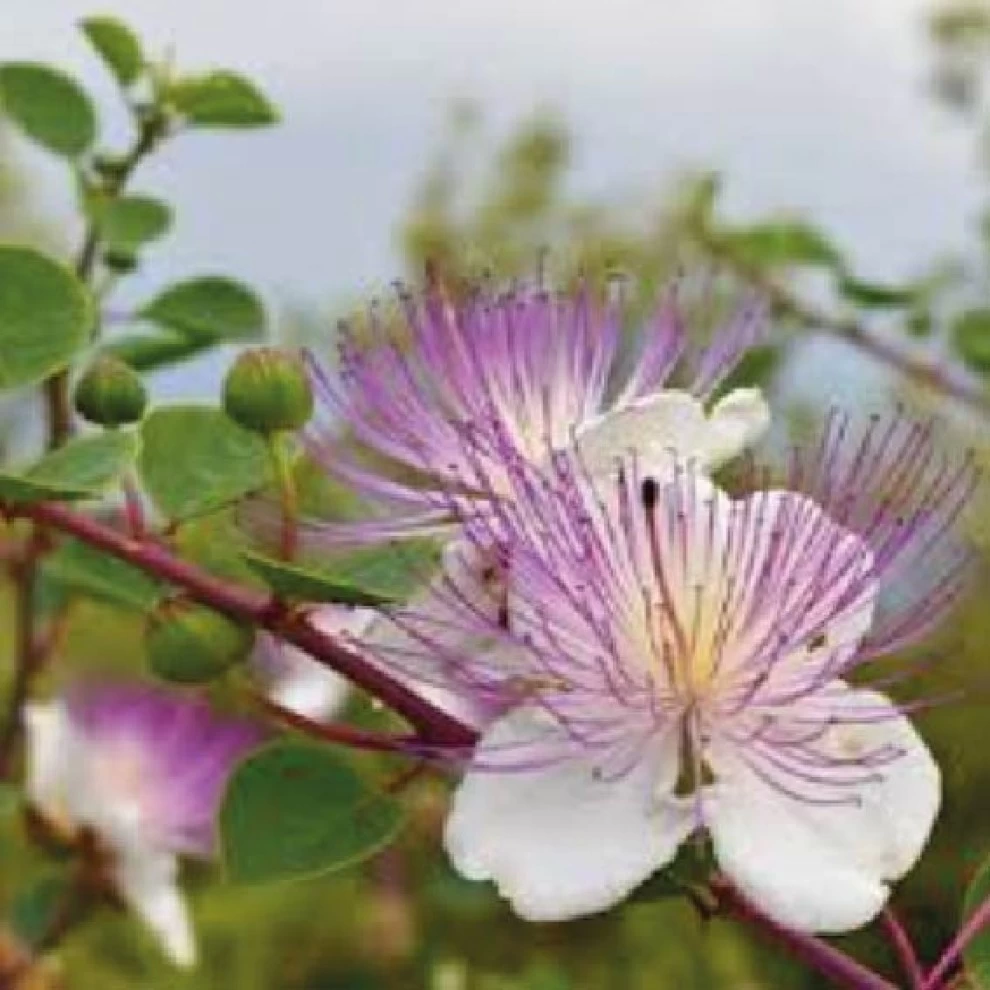
The caper flower:
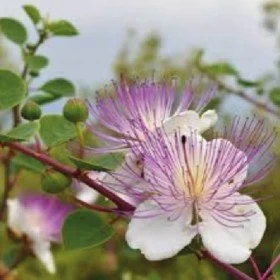
The flowers are beautiful, consisting of four petals and stamens, with petals measuring about 5-7 cm in length. They are white to pink in color and bloom from June to August.
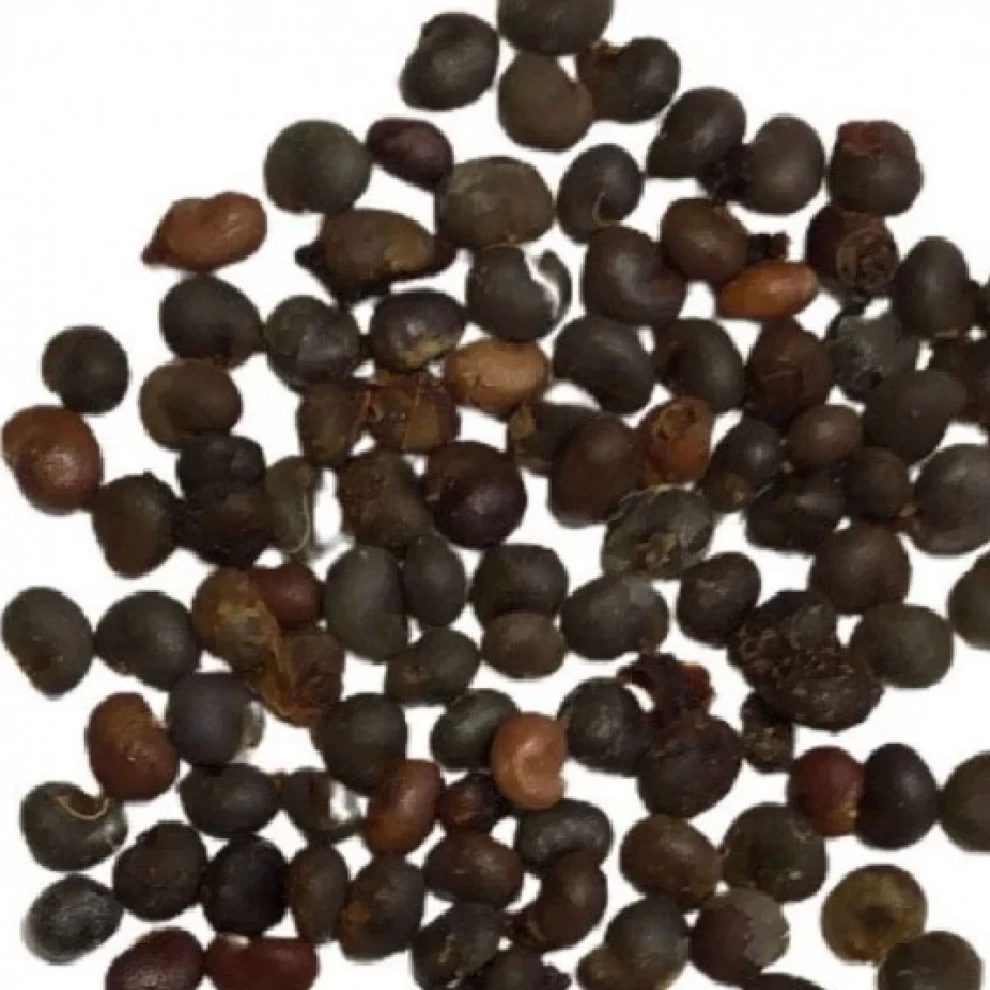
The caper seeds:
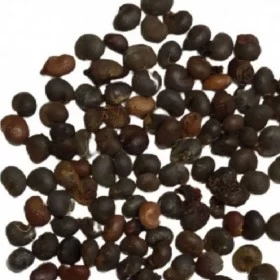
The fruits are dark green, pear-shaped, and about 5 cm long. They have a red pulp filled with seeds.
The caper planting season:
It is planted in the spring and late winter, and can also be grown year-round in greenhouses. Indoor or plastic enclosures with controlled temperature and sunlight, or those with adequate lighting, are suitable for growing capers. Climate and soil suitable for caper cultivation: Capers require a dry or semi-dry climate and are highly tolerant of harsh climatic conditions. They can withstand frost and temperatures as low as -4°C and temperatures exceeding 40°C. The climate of Saudi Arabia and the Gulf countries is ideal for their cultivation. Capers prefer rocky, calcareous, and gypsum soils, but they can also be grown in sandy soils and even adapt to poor soils. Method of propagating capers: They are propagated by seeds sown no deeper than 1 cm from the soil surface, and also by cuttings. Benefits and uses: Capers are nectar-producing plants with a flowering period when nectar is scarce for bees. Caper honey also has health benefits. Native habitat of capers: The Mediterranean basin The Mediterranean, Saudi Arabia and the Gulf States.