Common Name: Millingtonia Tree
Millingtonia hortensis
Also known as: Jasmine Tree
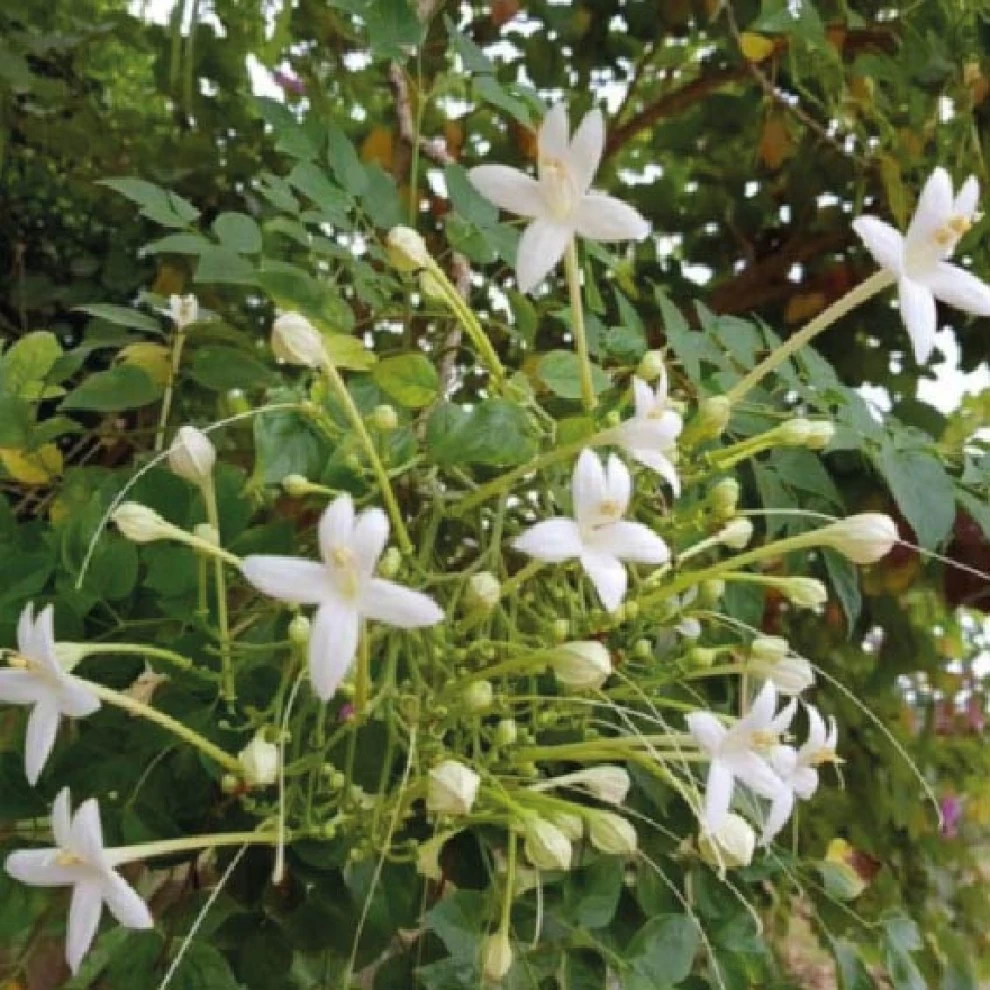
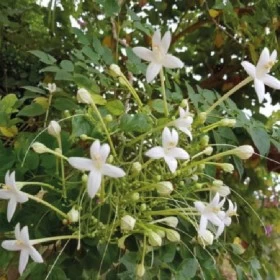
An evergreen tree and the only species in the genus Millingtonia, it can exceed 15 meters in height. Its leaves resemble those of the neem tree but are not uniform. It flowers profusely and is distinguished by its fragrant flowers with a pleasant scent.
• Millingtonia Flower:
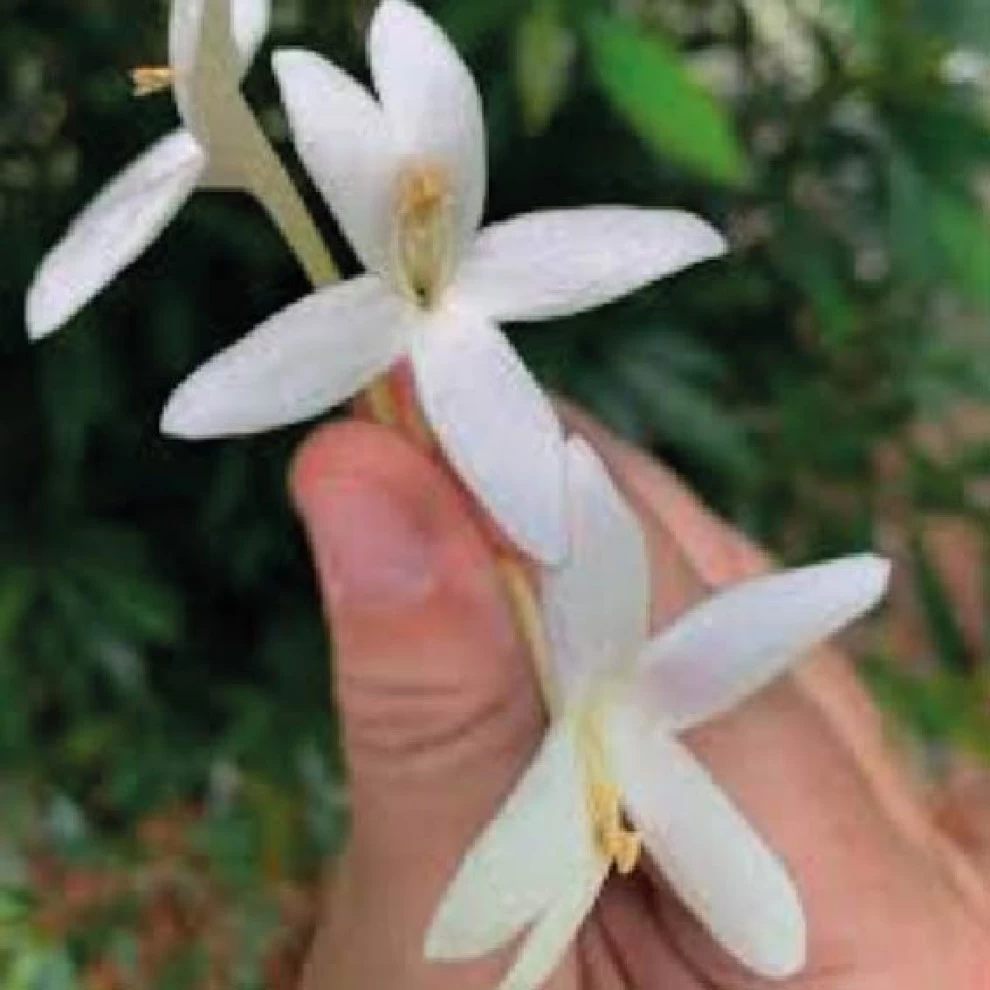
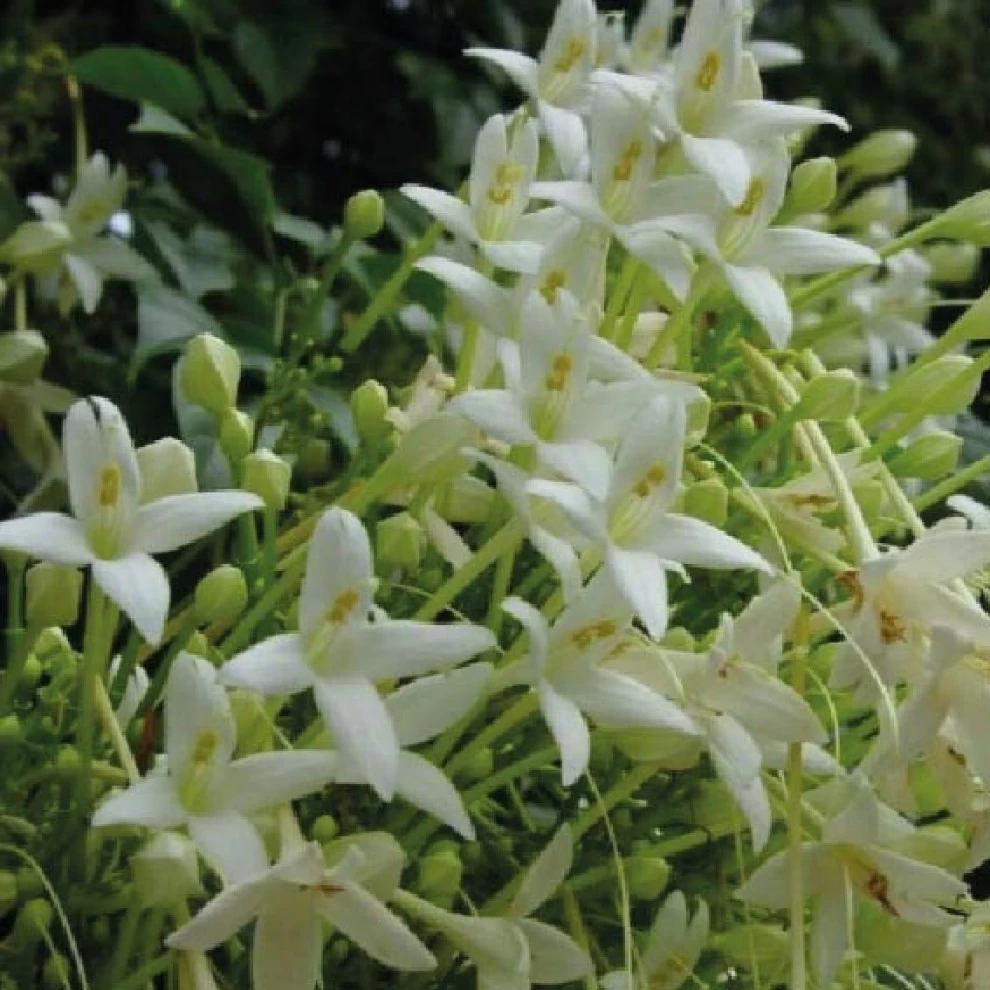
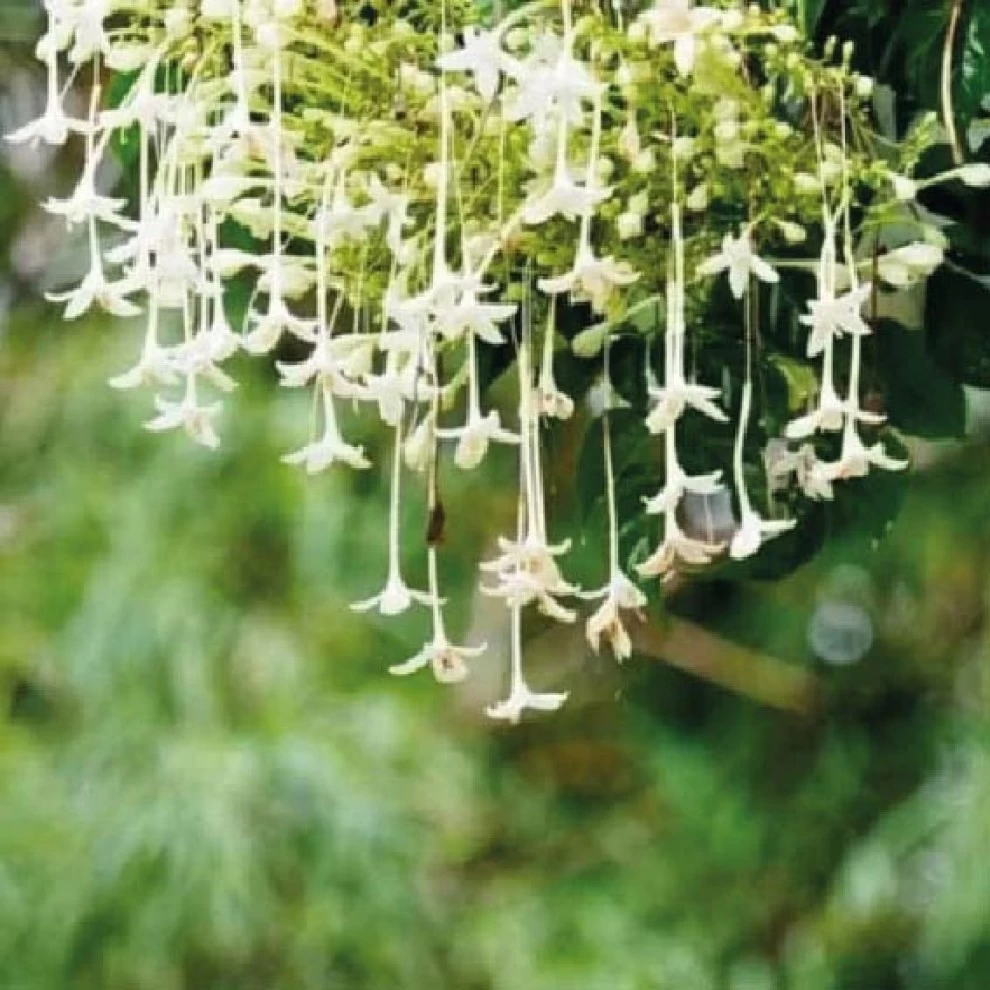
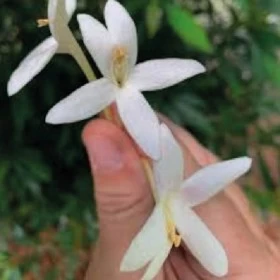
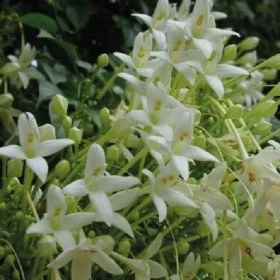
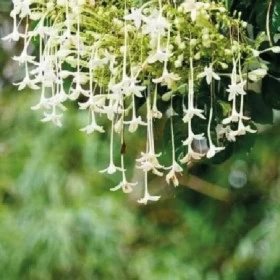
Its flowers are trumpet-shaped, white, and dense, forming large clusters during spring and summer. They bloom at night and fall in the morning, leaving a pleasant fragrance.
• Millingtonia Seeds and Fruit:
Its fruits are flat and smooth, containing feathery, winged seeds.
• Millingtonia Planting Season:
The best time to plant Millingtonia is in spring and autumn. It can also be grown year-round in temperate regions and agricultural reserves.
• Suitable Climate and Soil for Millingtonia:
Tolerant of frost, drought, heat, and salinity. Medium-sized and not tolerant of strong winds, it thrives in fertile, well-drained soil.
• How to Grow Millingtonia Trees:
Millingtonia trees are propagated by cuttings and by seeds planted 1 cm deep in the soil. Organic fertilizer can be applied after the seedlings have grown slightly to accelerate their growth and development.
• Benefits and Uses:
Millingtonia trees are cultivated for their ornamental value and fragrant flowers. Their wood is of high quality and used in various industries, in addition to its medicinal uses.
• Native Habitat of Millingtonia Trees:
South Asia.