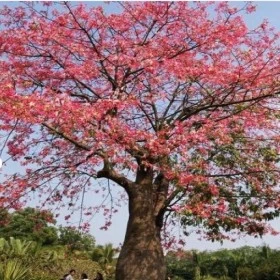
Golden Rain Tree (*Koelreuteria paniculata*) Seeds
Common Name: Golden Rain Tree
Scientific Name: *Koelreuteria paniculata*
Also known as: *Koelreuteria* tree
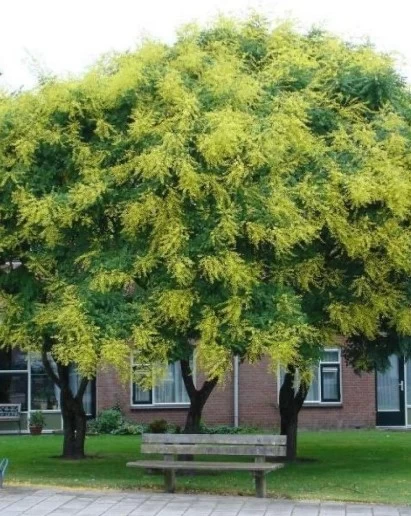
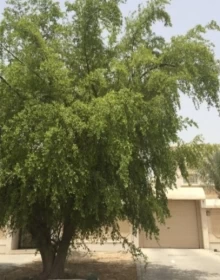
A deciduous ornamental and shade tree with a sturdy, woody trunk, reaching a height of up to 7 meters. It features long, dark green, compound-like leaves, a broad canopy, and dense clusters of yellow flowers. It is a widely popular tree globally.
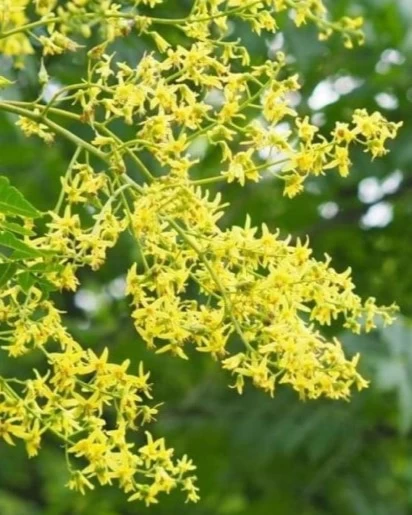
• What do the flowers of the Golden Rain Tree look like?
The flowers are small, yellow, and four-petaled. They grow in dense clusters that can exceed 20 cm in length. They are nectar-rich—attracting bees—and bloom during the spring and early summer.
• What do the fruits and seeds of the Golden Rain Tree look like?
The tree bears fruit in the autumn. The fruit consists of a papery, membrane-like husk that transitions from green to orange, creating an attractive appearance. Inside, it contains three dark-colored, round, and hard seeds.
• When is the best time to plant the Golden Rain Tree?
The best time to propagate the Golden Rain Tree is during the spring or autumn; however, it can be planted year-round in temperate regions or within protected agricultural environments.
• What climate and soil are suitable for the Golden Rain Tree?
The *Koelreuteria* (Golden Rain Tree) is rarely affected by pests. It thrives in sunlight, tolerates climatic fluctuations, and flourishes in various soil types. Fertile and well-drained soil.
• How is the Golden Rain Tree cultivated?
It is propagated via cuttings or seeds, which should be planted at a depth of no more than 1 cm below the soil surface. Organic fertilizer can also be applied to accelerate its growth.
• What are the benefits and uses of the Golden Rain Tree?
It is considered one of the best ornamental and shade trees, prized for its attractive appearance and abundant shade.
• Where is the Golden Rain Tree native to?
China and Korea.