All orders are delivered within 48 hours
For any inquiries, you can contact us on WhatsApp 99222292
You can order via WhatsApp and pay via the link
Pay online


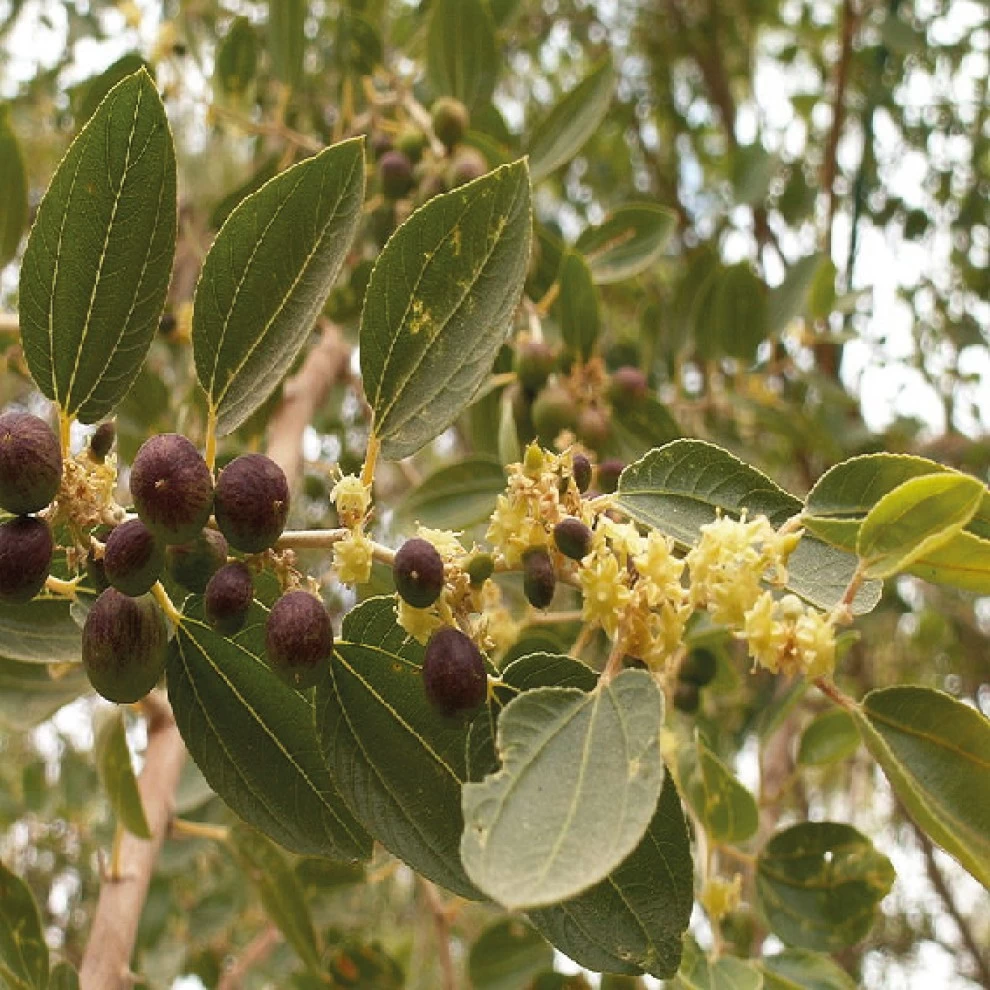
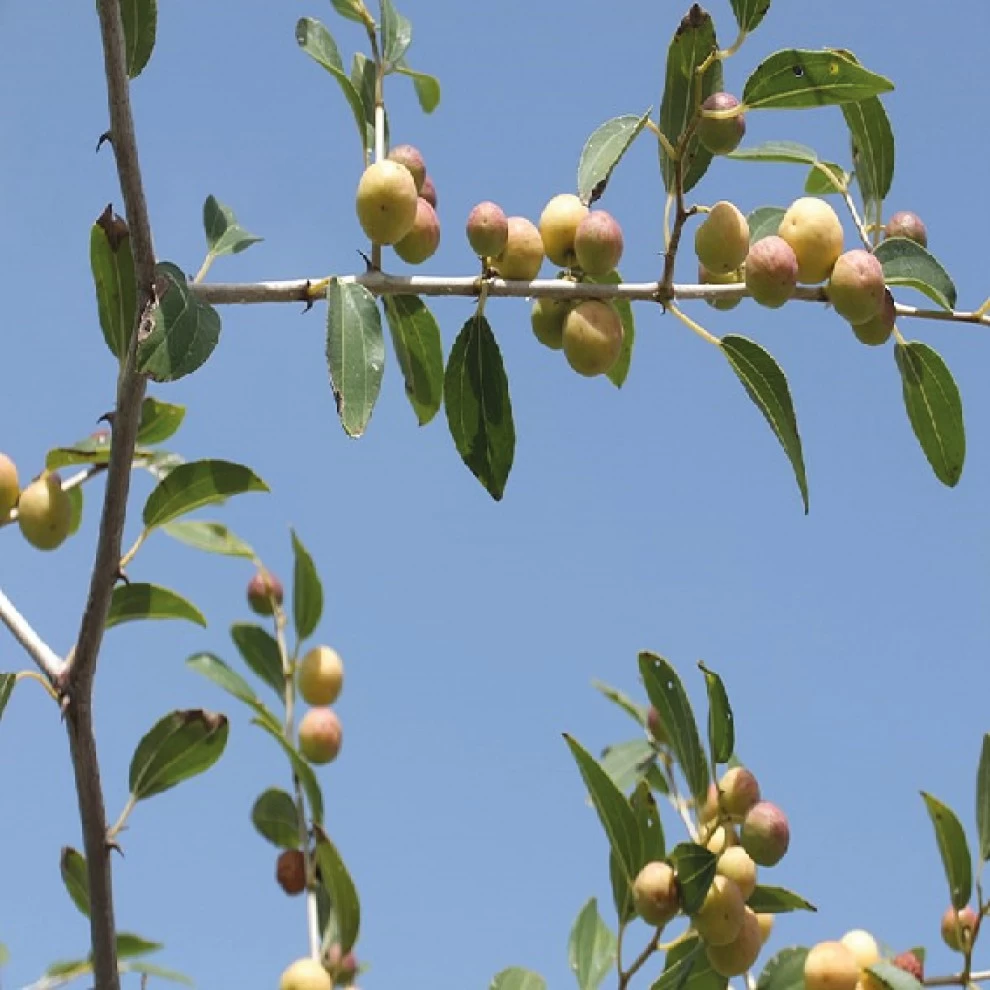



The wild sidr tree - Ziziphus nummularia is an evergreen tree native to tropical North Africa and southern and western Asia. It is native to the Levant, East Africa and some tropical countries. The fruit and leaves of the tree were used in ancient Egyptian food and medicine. Recent research has shown that compounds extracted from the leaves of the tree can be used to reduce severe inflammation. In addition, the honey of bees that feed on the nectar of the tree has antibacterial properties that prevent infectious diseases, especially when compared to other types of honey. The wild sidr tree reaches a height of approximately 2 to 5 meters and can be found in nature at a lower height due to grazing by cattle and camels on its terminal branches. It is a dense, deciduous, spreading tree with a branched trunk with light brown, winding branches that reach a height of approximately 2 to 4 meters. Its leaves are oval in shape, small and have a thick bark. They are opposite on the stem and the length of the blade is three centimeters and it is veined with three veins on the lower side and has two auricular spines, one of which is straight and the other is curved. The flowers are formed in the armpit of the leaves in a number ranging between 10 and 15 flowers, and the flowers are small, white and greenish in color, and the fruits are cherry, tender and bitter in taste, black when ripe and contain 3-4 seeds.
The Sidr tree grows in hot, dry areas with poor soil and tolerates soil salinity, and is considered one of the best plants that can withstand such harsh conditions
Agriculture:
It is planted by seeds
The seed is treated by soaking it in hot water 24 hours before planting it.
The best time to plant it is March and April
The importance of the wild Sidr tree:
1- Wild bees feed on the flowers of the Sidr tree and produce good honey with high nutritional value called "wild Sidr honey", which is one of the most expensive types of wild honey requested from inside and outside the country.
2- In addition, large and small animals graze the Sidr tree and eat its jujube, leaves and stems.
3- The sturdy Sidr wood is used in making many old machines and tools, as some plowing machines were made from it in agriculture, and it is also used in making drums and many wooden household tools. It is also used to make "Al-Mahalah", which is a machine for shaking water from the well, and it was used in building old houses.
4- Its leaves are boiled in water and drunk to kill worms in the intestines and purify the blood. Ground Sidr leaves mixed with water are also used to set bone fractures, purify the skin and expel phlegm.


