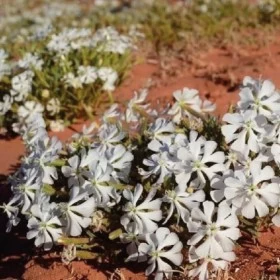
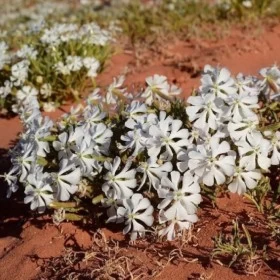
Nafud Soil Seeds (Silenea villosa)
Common Name: Nafud Soil
Scientific Name: Silene villosa
Other Names: Al-Abisa
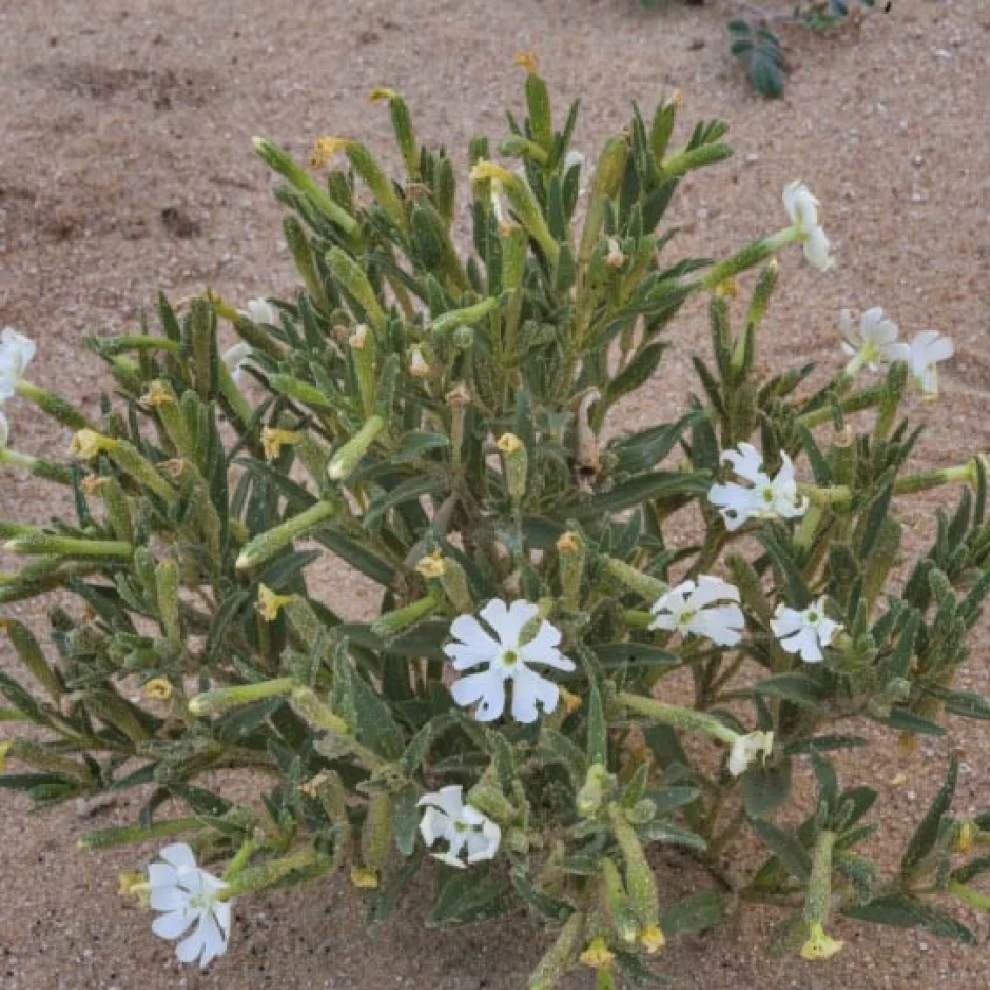
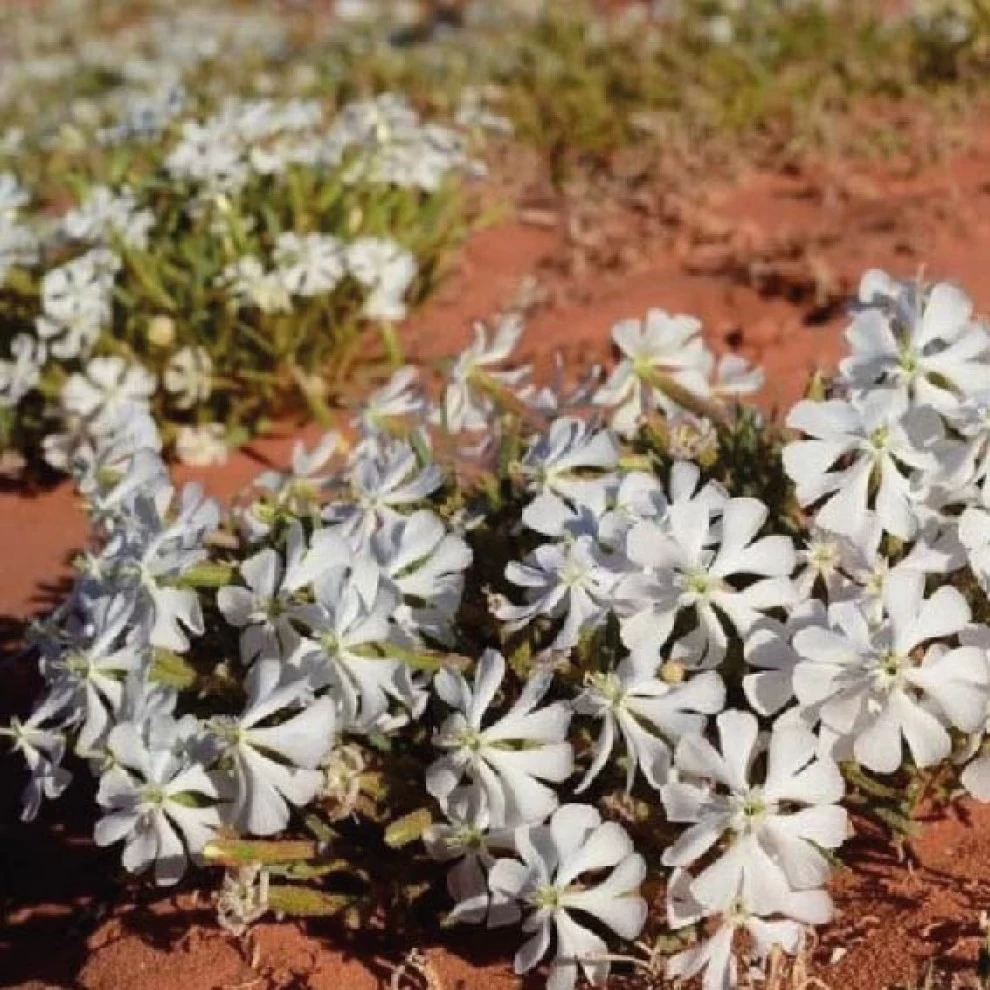
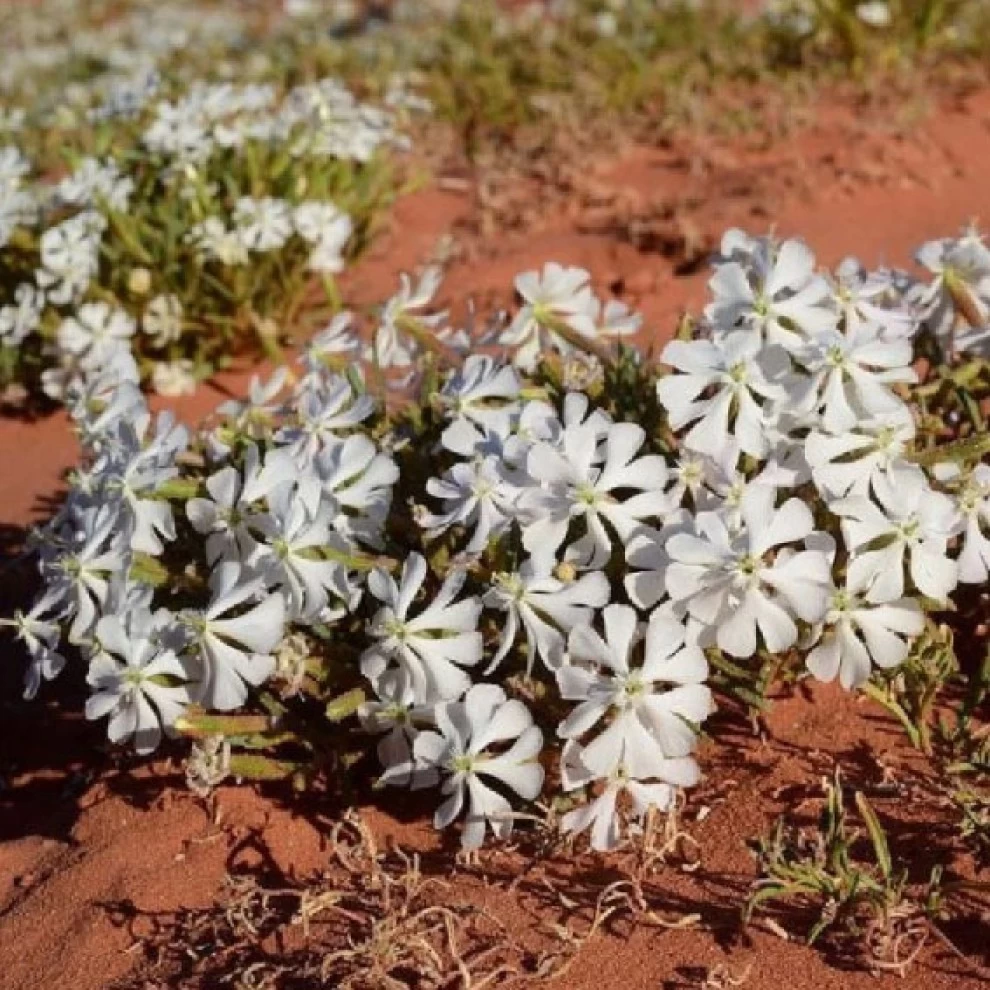
An annual wild grazing herb belonging to the genus Silene in the Caryophyllaceae family. It has boat-shaped leaves and short branches. Its small, dense, white flowers differ from Abu Dahina Soil in its horizontal growth and dense, double-petaled flowers. Nafud Soil typically appears in sandy areas during winter and blooms in spring.
• What does the flower of Nafud Soil look like?
Its flowers are small and have five double white petals. It blooms in spring.
• What do the seeds of Nafud Soil look like?
Its seeds are very small, spherical, black.
• When is the germination season for Nafud Soil?
October and November are considered the best months for germinating Nafud soil seeds. It can also be cultivated year-round in climate-controlled greenhouses and areas with temperate climates.
• What is the suitable climate and soil for growing Nafud soil?
It needs a temperate climate during the germination stage and light, well-drained soil.
• How is Nafud soil cultivated?
It is cultivated from seeds. Since Nafud soil seeds are extremely small, with thousands of seeds per gram, it is best to mix the seeds at a ratio of 0.5 grams of seeds to 50 grams of sand to facilitate dispersal. It should be watered regularly to prevent the soil from drying out during the germination period.
• What are the benefits and uses of Nafud soil?
It is cultivated for ornamental purposes in homes, gardens, and greenhouses. It is also a spring grazing plant.
• Where is the native habitat of Nafud soil?
Saudi Arabia and Iraq.