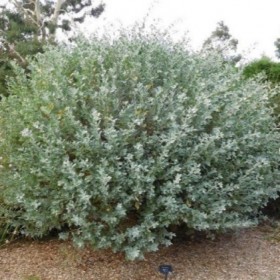
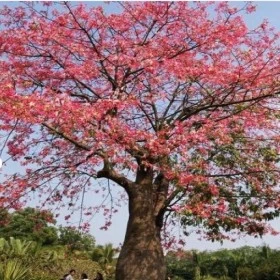
Castor Oil Plant Seeds (*Ricinus communis*)
Common Name: Castor Oil Plant
Scientific Name: *Ricinus communis*
Local Names: Hawa, Kart, Wairo, Al-Faliyah
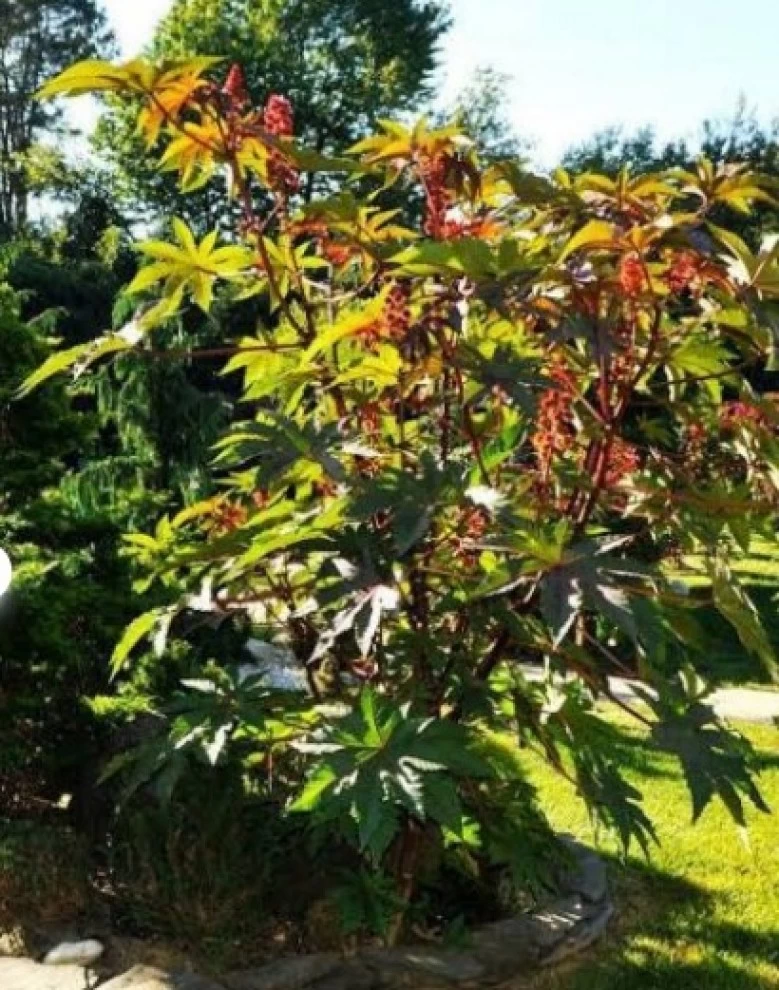
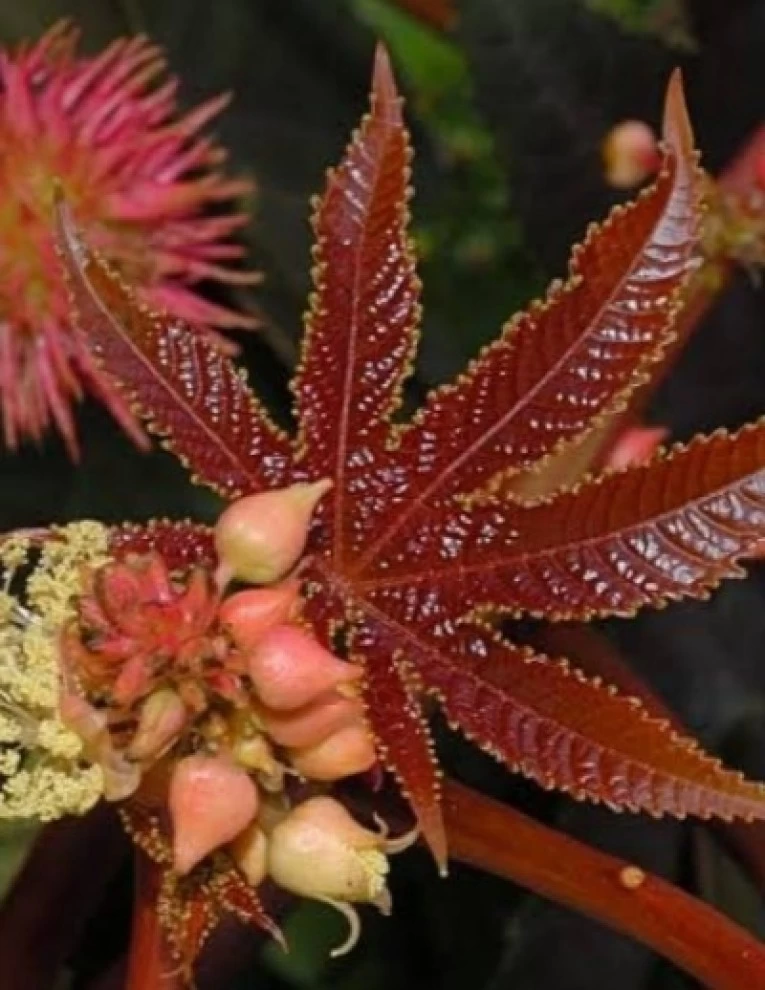
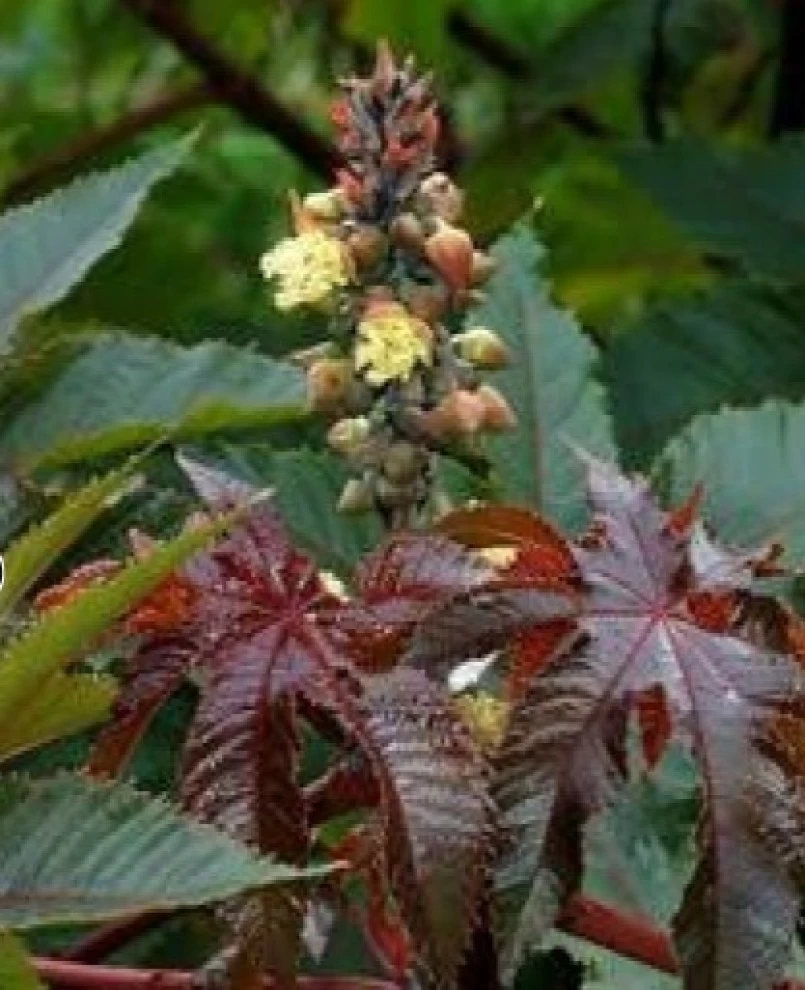
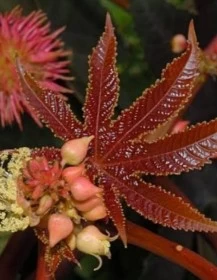
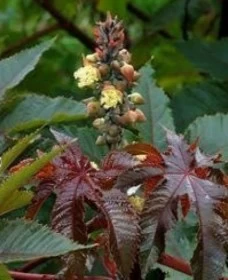
A plant of international origin that grows naturally in desert climates and under direct sunlight; it is fast-growing, reaching a height of 3–4 meters. It is multi-branched, with leaves that are primarily green—though sometimes appearing dark red—making it a popular choice for home garden landscaping.
Castor Oil Plant Fruit:
After flowering, the tree produces fruit in the form of clusters of spiny, spherical pods, reaching up to 30 cm in size.
Castor Oil Plant Seeds:
The seeds are oval-shaped and measure 2–3 cm in length. All parts of the plant are highly toxic, especially the seeds; the oil extracted from them contains a toxic substance known as ricin.
Uses of the Castor Oil Plant:
Castor oil is extracted from the seeds for use in various industries; the oil is obtained after the toxic substance has been removed.
Cultivation and Care:
The castor oil plant is cultivated in hot and temperate regions where temperatures range between 14°C and 18°C. Once the seeds germinate, the plant grows very rapidly. It requires fertile, well-drained soil and regular watering; ideally, the soil should be kept consistently moist. Benefits of Castor Oil:
Castor oil is used in medicine and industry and offers numerous benefits; it is utilized in the manufacture of pharmaceuticals and cosmetics, as well as in the production of soaps and paints.
Native Habitat of the Castor Plant:
It is native to India, widespread in tropical regions, and cultivated in Brazil.