All orders are delivered within 48 hours
For any inquiries, you can contact us on WhatsApp 99222292
You can order via WhatsApp and pay via the link
Pay online


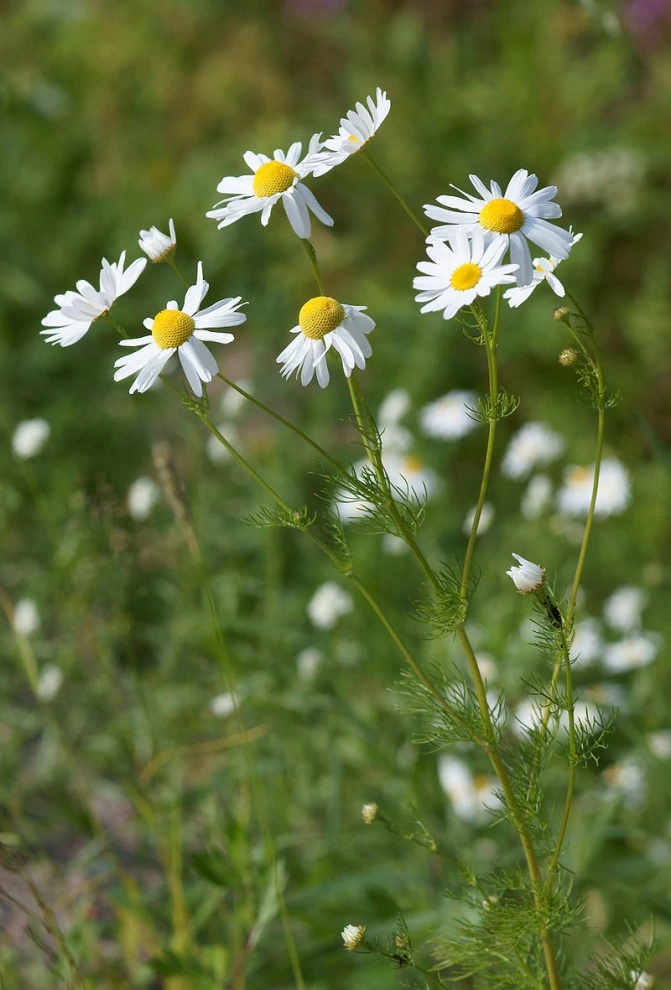



Chamomile (500+ seeds)
Botanical Description:
Chamomile is one of the oldest herbs used by humans medicinally for more than five thousand years.
It is a herbaceous plant belonging to the Asteraceae family, grows to a height of between 15 and 40 cm, and bears white flowers with a yellow center, and is cultivated in most countries of the world
Its stem is fast-growing and has many branches, and it blooms 6-8 weeks after germination, and its leaves are alternately feathery and divided into small, elongated, threadlike sections. The plant has a distinctive refreshing scent, and it blooms between June and August, and the surrounding flowers are white in color and the inner flowers are tubular and yellow in color. Chamomile grows in fields, on the edges of valleys, around houses, and on rooftops in some countries.
Chamomile flowers contain volatile oil that reaches 1.5% of the dried flowers. The oil is extracted using steam distillation. Chamomile oil is a thick, viscous, blue liquid that solidifies when cooled to zero degrees Celsius and has the well-known chamomile scent.
Cultivation and propagation:
By seeds
Medical uses of chamomile:
1. The flower powder is used externally to treat skin infections, ulcers, wounds in the mouth, and nail inflammation.
2. The steam of the flower boil is used for inhalation in cases of inflammation of the airways: nose, throat, and trachea.
3. The flower emulsion is used externally to wash eyes affected by conjunctivitis, and to perform vaginal washing to treat white or foul vaginal discharge, or for skin suppurations in general.
4. Chamomile boil is useful for cases of digestive disorders and diarrhea. Chamomile also helps expel gases generated in the intestines, calms the nerves, is an antispasmodic, and reduces fever.
5. Chamomile is used in medical cosmetics.
How to prepare chamomile tea:
Add a spoonful of chamomile flowers to a cup of boiling water, and leave for ten to twenty minutes before drinking.
Chamomile infusion is also made in the same way as tea, then used to cleanse any area of the body. Be careful not to boil chamomile with water so as not to lose the volatile oils.